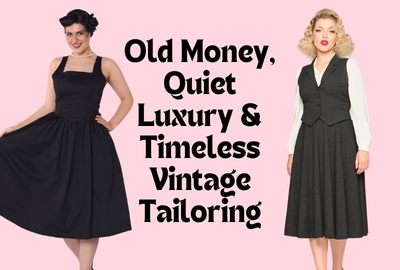
Dress codes are the written or unwritten rules about what is considered appropriate clothing for a certain occasion, situation, or event. For example, wearing formal attire in the workplace, the flexibility to dress more casually on Fridays, or the word "cocktail" at the bottom of an invitation can be seen as reflections of dress codes in daily life. Dress codes are closely linked to workplace culture, the type of event, and social norms, while also enabling women to create their own style.
In Collectif London's vintage-inspired collections, which are designed with modern cuts while drawing inspiration from past decades, you can find clothes suitable for various situations and occasions. From tea dresses for afternoon meetings with friends to pencil skirts and blouses you can wear in the workplace, Collectif London's designs help you dress appropriately for many settings and different dress codes.
What are the Well-Known Dress Code Types for Women?
Dress codes, sometimes stated explicitly on an invitation but more often defined by the type of event, organisation, or setting, are the unwritten fashion rules. The dress code types can help to determine the level of formality, relaxation that is appropriate for an occasion.
Job interviews, business meetings, the workplace, weddings, cocktail parties, and dinners with friends all require different styles of dress. Casual, smart casual, and business casual dress code requirements, as well as formal dress styles, are shaped by the correct combination of many details, from the cut of the clothes to the fabric, and from the heel height of the shoes to the choice of handbag and accessories.
Even so, dress style categories should not be viewed as rigid and unchanging. When understood or interpreted correctly, the same clothing can be adapted to more than one setting with different shoes, bags, and jewellery. The aim is to use clothing rules not as restrictions, but as practical guides in choosing appropriate elegance for the situation.
| Dress Code Type | Formality Level | Settings or Events | Main Pieces |
|---|---|---|---|
| Casual Dress Code | Lowest formality, highest freedom | Holidays, shopping, weekends, and relaxing with friends | T-shirts, polo shirts, casual shirts, jeans and chinos, tea dresses, loafers or sandals |
| Smart Casual Dress Code | Between casual and business formal, chic but also relaxed | Office without strict suit rules, business lunches or office to evening days | Blazers, classic but comfortable trousers, dark non-distressed denim, midi dresses, basic blouses |
| Business Casual Dress Code | More formal than smart casual, less formal than full business | Modern workplaces, meetings, presentations, and office days | Tailored trousers and skirts at or below the knee, pencil dresses, shirts, and knitwear; neither too tight nor too loose. |
| Semi-formal Dress Code | Mid–high formality, but elegant | Daytime work events, civil ceremonies, graduations, and outdoor receptions | Knee-length or midi dresses, elegant but not bold jumpsuits, skirt and jacket outfits, little black dress. |
| Cocktail Dress Code | Between semi-formal and formal, party-ready | Evening receptions, cocktail-format events, engagement parties, New Year's, romantic dinners, Valentine's Day | Dresses above the knee, at the knee, or midi length, with richer colours, high or slim heels, small evening bags, jewellery. |
| Formal Dress Code | High formality for work and evening | Corporate events, formal business dinners, gala evenings, protocol receptions, and evening ceremonies | Tailored blazers with trousers or skirts, below-the-knee dresses, dark suits. Long or ankle-length dresses or suits. |
| Black Tie Dress Code | Very high evening formality | Galas, high-profile evening weddings, award nights, and prestigious receptions | Floor-length or at least ankle-grazing dresses, deep tones (black, navy, emerald, burgundy) with accessories, high or slim heels. |
| White Tie Dress Code | The highest, ceremonial level of formality | State dinners, royal events, historic galas, ultra-formal occasions | Full-length or ball gown, usually one-piece. Off-the-shoulder, strapless, or deep necklines. |
Comfort and Elegance in One With The Casual Dress Code
The casual dress code is characterised by the lowest level of formality and the greatest freedom. However, this does not mean careless or untidy. The casual style creates a clean, comfortable daily look with high-quality, well-fitting pieces. In casual dress combinations, basic t-shirts, polo shirts, jeans, chinos, simple dresses, trainers, loafers, or minimal boots are generally used together. Jersey, denim, linen, and cotton-blend are the main fabric groups in this code. Even though neutral tones generally dominate the colour palette, bright colours can be used on certain pieces, like belts or bags, to enliven the appearance. During holidays, shopping, and weekend meet-ups with friends, those who wish to look smart without challenging the rules can combine comfort and style with a casual dress code.
Smart Casual Dress Code for Women Style Tips
The smart casual dress code is a way of dressing positioned between casual and the classic business style. It sits between everyday comfort and the strict lines of formal wear; therefore, answers to the question 'What is the smart casual dress code?' generally describe a neat, carefully put together look between the two. Especially in office cultures where there are no strict dress codes, like wearing a suit, but clothing choices are still expected to be appropriate for professional business life, the smart casual style is a lifesaver.
Blazers, classically but comfortably cut trousers, dark, non-distressed denim, midi dresses, and simple blouses play an important role in smart casual style. You can easily create a smart casual look by pairing 70s vintage-inspired flared jeans with a 50s-style polka dot top, or a 40s and 50s-inspired blazer jacket with a midi skirt.
Business Casual Dress Code for Women for a More Formal But Comfortable Style
The business casual dress code is a style of work attire in which the classic suit culture has been relaxed, but a professional appearance is still important. As the need for comfort in the workplace increased in the 1980s and 1990s, the question of "What is business casual dress code?" became much more widely discussed. When mentioning business casual, the main aim is to create neat, professional-looking outfits that are suitable for a professional life without having to wear a full suit. In this style, well-tailored trousers or skirts that fall at or just below the knee, simple dresses, shirts, and fine knitwear are appropriate; pieces should not be too tight or overly loose.
Semi-Formal Dress Code for Daytime Events
Semi-formal dress style is a good choice for attending daytime work events, civil ceremonies, graduations, and outdoor receptions with a garden party dress code, requiring elegance and grace, but not ostentation. Knee-length or midi dresses, elegant but understated jumpsuits, and flattering skirt-jacket combinations, especially the little black dress, are suitable for the style. You can also use accessories to add a little dynamism to the look, like a colourful necklace, high-heeled shoes, or earrings. You can easily create a semi-formal dress code by pairing a 50s-inspired pencil dress with a fitted short jacket, or a structured midi dress with a bolero and classic heels.

Cocktail Dress Code for Evening Celebrations
Cocktail dress code is one of the dress style categories used especially for evening and night events, starting after 4 p.m., positioned between semi-formal and formal dress styles. It does not require a full-length gown; dresses that fall above the knee, at the knee, or at midi length form the basis of the style. More luxurious fabrics like satin, silk-blend crepe, velvet, and lace are used together with rich colours, metallic textures, and controlled sparkle details.
Compared with the semi-formal style, a more party-ready and showy look is targeted, but one that is not as strict as black tie. It is ideal for evening dress code for weddings, receptions, corporate events in cocktail format, New Year's Eve celebrations, engagement parties, and special celebratory dinners; for romantic evening meals, and especially in Valentine's Day dress code expectations. You can build a cocktail outfit by choosing a velvet 50s style dress with an evening bag, or a wrap dress with statement earrings and high heels.
Formal Dress Code for Women in Professional and Evening Settings
Formal dress code is one of the highest levels of elegance and seriousness in both professional life and evening events. In business life, well-tailored blazers complete with dress trousers or a skirt, below-the-knee sheath dresses, and simple, dark-coloured suits can be preferred for a formal look.
Additionally, at evening events, full or ankle-length evening dresses, and in some cases tuxedos or suits tailored for women, can be ideal. Luxurious fabrics like silk, satin, velvet, tulle, and lace, combined with clean finishes, provide a style that is not as strict as the black or white tie dress code, but carries a similar level of respect and formality. It is suitable for gala dinners, corporate award ceremonies, protocol receptions, and evening weddings. You can create a formal look by choosing a glitter maxi dress, or by pairing a 40s-inspired puppytooth blazer with wide-leg tailored trousers and classic heels.
Black Tie Dress Code for Evening Elegance Decoded
Black tie dress code is a dress style that significantly raises the level of formality for evening and night events, but is less formal than the ceremonial strictness of white tie. For anyone wondering "What is black tie dress code?", the basic expectation is a floor-length or at least ankle-grazing dress in silk, satin, velvet, chiffon, or fine lace. Generally, clean shoulder lines, fluid skirts, and well-balanced necklines are acceptable for black tie.
Black is always a safe option, but deep tones like navy, emerald, or burgundy can also be chosen, especially when paired with well-considered accessories. Slim or high-heeled shoes, a small evening bag, and jewellery pieces complete the look.
White Tie Dress Code for The Prestigious Events
White tie dress code is the most formal clothing rule, sitting at the highest level in the hierarchy of dress code categories and often referred to as "full evening dress". Historically associated with aristocracy, the code is still seen today at state dinners, protocol organisations, galas, or other prestigious events. Women are expected to wear a floor-length evening or ball gown, and off-the-shoulder, strapless, or deeply décolletage styles are acceptable. Silk, satin, tulle, organza, fine lace, pearls, sequins, and crystal detailing can also be used; ostentation is not forbidden, but rather expected. Classic evening makeup, a small but luxurious evening bag, and glamorous jewellery complete the look, and not wearing a watch is one of the unwritten rules of the white tie dress tradition that still exists today.
Whether the invitation calls for smart casual, semi-formal, cocktail, black tie, or even white tie dress code, Collectif London's vintage-inspired dresses make it easier to interpret each code in your own way. Explore the collections to find appropriate pieces for your personal style.
Frequently Asked Questions About Dress Codes
Why is the Dress Code Important?
Dress codes are one of the simple ways of setting a level of formality, showing respect for the occasion, and preventing underdressing or overdressing. They also simplify the process of choosing dresses by narrowing the options to what is appropriate for the event.
What are the Dress Codes for Weddings?
Weddings usually range from semi-formal to black tie. Daytime ceremonies often call for semi-formal or garden party dress codes, while starting after 4 p.m., evening receptions lean towards cocktail attire. More traditional weddings may necessitate formal or black tie dress codes on the invitation.
What Dress Code is Semi-Formal?
A semi-formal dress code is more formal than smart casual, but less formal than cocktail. Typically, this means knee-length or midi dresses, elegant jumpsuits, or skirt-and-jacket outfits. It is common for daytime weddings, graduations, and business receptions.
What is the Difference Between Smart Casual and Business Casual?
Smart casual is a smart but relaxed style, with pieces like blazers, dark jeans or chinos, midi dresses, loafers or block heels. Business casual is more office-focused with tailored trousers or skirts, shirts, and simple dresses.
Are Jeans Appropriate for a Business Casual Dress Code?
In more relaxed modern offices, dark, non-distressed, well-fitting jeans can be acceptable when styled with a blazer, shirt, and smart shoes.