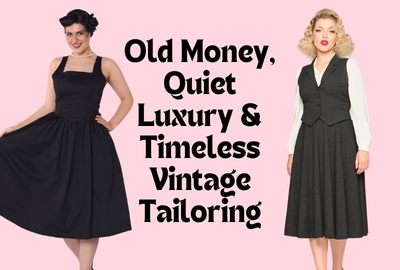
Collectif's design range extends across the decades of vintage reproduction, from the structured formality of 1940s utility dressing through the New Look of the 1950s and into the liberation of 1960s silhouette. The shift from decade to decade is not arbitrary — each era has a distinct architectural logic, a different answer to the question of how a garment should hold its shape. The 1960s answer is the most radical departure from what came before: abandon the waist entirely. The mod silhouette does not nip, cinch, or define the waist. It releases it. What results is the shift dress, the A-line mini, and the clean-shouldered silhouette that defined a decade and remains the most misunderstood era in vintage fashion.
This guide establishes the 1960s as a distinct construction category — what makes a garment genuinely mod, how it differs from 1950s pieces at the architectural level, and how to identify, buy, and wear 1960s-inspired vintage without it reading as a costume.
The 1960s Silhouette — What the Mod Era Actually Looked Like
The mod era — roughly 1958 to 1969 — emerged from a very specific place: the Chelsea and Carnaby Street scenes in London. Mary Quant's Chelsea-era designs defined the architectural principles of mod fashion — the shift silhouette, the geometric print, the shoulder-hang that abandoned the nipped waist. These principles were not decorative choices. They were a deliberate rejection of the 1950s hourglass ideal, which required boning, petticoats, and structured foundation garments to function. The mod silhouette worked without any of them.
The defining garment is the shift dress: sleeveless or short-sleeved, hanging from the shoulder seams, cutting straight or gently A-line to a hem at the mid-thigh. The neckline is usually a jewel or boat neck — geometric itself, sitting horizontally across the collar. The sleeves, where present, end at or above the elbow. The hem ends at mid-thigh — considered by mod standards, not micro-mini by modern ones.
The prints that defined the era followed the same architectural logic: geometric, op-art, block colour, bold graphic. The pattern and the garment were conceived together. A circle print on a shift dress has visual coherence that the same print on a gathered swing skirt does not. This is why so much 1960s fashion reads as internally consistent: the silhouette and the surface were designed to work as a single visual argument.
The other defining element of the mod era is youth. The 1950s silhouette required skill to dress — the right undergarments, the right proportions, the right posture. The 1960s silhouette required almost none of this. You put on a shift dress and you were done. That accessibility was deliberate, and it is what makes the 1960s silhouette the easiest vintage era to wear authentically today.
1950s vs 1960s: The Construction Difference That Defines Each Era
The defining construction difference between 1950s and 1960s vintage silhouettes is waist suppression — 1950s pieces are waist-fitted and full-skirted, while 1960s pieces release the waist entirely, creating the A-line shift that hangs from the shoulder.
This is not a matter of style preference. It is an architectural fact. A 1950s silhouette is structurally complex: it requires waist suppression (through darts, boning, or a fitted waistband), hip structure (either from petticoat volume or pencil-fit tension), and a defined waist-to-hem ratio. A 1960s silhouette is structurally simple: the dress hangs from the shoulder seams, cuts straight to the hem or flares gently from the hip without waist emphasis, and reads slim through volume reduction rather than shaping. The shift dress is the defining 1960s garment because it eliminates every 1950s construction element.
| Dimension | 1950s | 1960s (Mod) |
|---|---|---|
| Waist treatment | Suppressed — fitted via darts, boning, or waistband | Released — no waist emphasis; shoulder-to-hem hang |
| Skirt shape | Full circle, A-line from waist, or narrow pencil | A-line shift from hip; minimal flare or straight column |
| Hem length | Midi to full (tea-length to floor for formal) | Mini to above knee; hemline is the defining proportion |
| Structural complexity | High — multiple shaping elements | Low — shoulder seam does all the work |
| Primary silhouette garment | New Look dress, swing dress, pencil skirt | Shift dress, mod mini, A-line skirt |
| Understructure required | Petticoat (swing/circle) or none (pencil) | None — the shift reads clean without foundation garments |
| Typical fabric weight | Medium-heavy (bengaline, cotton sateen, crepe) | Light-medium (crepe, cotton lawn, jersey, brocade) |
| Era marker vocabulary | Waist, fitted, full-skirted, structured, hourglass | Shift, A-line, mod, geometric, shoulder-hang |
The practical implication of this table is that the two eras are not interchangeable. A dress with a fitted bodice, bust darts, and a full skirt is a 1950s garment, regardless of its hem length. A dress that hangs from the shoulder seam without a defined waist is a 1960s garment, regardless of its print or colour. The construction tells you the decade. Hemline alone does not.
Mod Shift Dresses: How to Identify Era-Accurate Construction
If the question is 1960s vintage fashion, the shift dress is the answer — because the silhouette is structurally defined by the shoulder-to-hem drop without waist interruption. A 1960s-accurate shift dress has four identifiable construction markers:
1. Shoulder seam placement. The garment hangs from natural shoulder-point seams. In a pure shift, there is no seam below the armscye until the hem. The shoulder seam is doing all the structural work.
2. No defined waist. The absence of darts at the waist, a fitted waistband, or any waist-level seam is the clearest 1960s marker. Run your hand down the side of the garment: it should fall from underarm to hem without a curve in or out at the waist level.
3. A-line or straight column silhouette. The skirt portion either falls straight from the shoulder seam or flares very gently from the hip — not from a fitted waist. The difference between a 1950s A-line (which flares from a suppressed waist) and a 1960s A-line (which flares from the hip, with no waist suppression above) is visible in construction.
4. Hemline at mid-thigh. The mod era defined itself by shortening the hemline. Mid-thigh — approximately 5–10cm above the knee — is the hallmark length. Micro-mini (more than 15cm above the knee) reads theatrical; knee-length reads transitional rather than definitively mod.
Collectif's 1960s collection includes several pieces that apply this silhouette logic. The Mandy Mini Check Dress (£65.00, UK 6–22) is the most explicitly 1960s-positioned: Collectif's own copy reads "The 60's are calling!" The blue and yellow check print on a sleeveless mini silhouette places it squarely in mod territory — the check geometric on a simple dress construction is architecturally consistent with the era. The Dolores Camden Girls Mini Dress (£65.00, UK 8–22) offers the same mini length in a fitted bodice style with elasticated off-shoulder sleeves — the playful silhouette sits within the 1960s hemline range. Both are part of Collectif's dedicated 1960s collection, designed to period-silhouette references.
For occasion wear in the 1960s silhouette: Collectif offers the Caterina shirt dress — front button fastening, short turn-up sleeves, knee length — which functions as a tailored 1960s-adjacent workwear piece when styled with flat-heeled shoes and a structured bag. The shirt dress was a genuine 1960s wardrobe staple, particularly for daywear and occasion dressing.
Mod A-Line Skirts and Separates
The 1960s silhouette extended beyond the shift dress into separates. The A-line mini skirt was as much a defining 1960s garment as the dress — and in many ways more practical, because it created the same mod silhouette while allowing the top to vary.
A 1960s-accurate A-line mini skirt has no waist suppression below the waistband. From the waistband down, the fabric falls in a clean A-line flare to a mid-thigh hem. There are no darts in the skirt panel. The difference between this and a 1950s A-line skirt is subtle but identifiable: the 1950s version typically has a fitted waistband with darts below it, creating a more defined hip curve. The 1960s version treats the waistband as a clean horizontal starting point, with the A-line shape beginning immediately below.
Collectif offers the Annie Mini Skirt (£40.00, UK 6–26) in both black and brown — a high-waisted pleated mini that works as a 1960s separate. The decorative silver square buckles and clean pleated construction are period-consistent details.
Pairing 1960s separates correctly is a construction decision as much as a style decision. A mod A-line skirt reads correctly when paired with a simple top that does not add volume at the waist: a fitted crew-neck knit, a plain sleeveless shell, a simple collarless blouse. The outfit-building logic of the 1960s is the opposite of the 1950s — rather than balancing a full skirt with a fitted waist, you balance a straight skirt with a simple top. Neither garment competes for visual attention. The print, if there is one, does the work.
How to Wear 1960s Vintage Without the Costume Effect
A 1960s mod dress reads as fashion rather than costume when the proportions are correct — hemline to mid-thigh not micro, sleeve length to elbow not cap, collar size proportionate to shoulder width. The construction principles are the same in a genuine period garment and a well-made reproduction: shoulder seams that sit at the natural shoulder point, a shift that hangs clean without waist pull, and a hem length that reads considered rather than theatrical.
The most common mistake when wearing 1960s-inspired pieces is treating the hemline as a signal of extremity rather than proportion. A micro-mini shifts the reading from fashion to costume because it references Halloween not heritage. The mid-thigh hem — the authentic mod length — is the proportion that makes the silhouette read as a deliberate style choice.
The second common mistake is cap sleeves. Cap sleeves are technically 1960s in origin but they read awkwardly on most body types because they interrupt the shoulder line without providing the clean horizontal that a jewel or boat neckline creates. For most wearers, the sleeveless shift or the short elbow-length sleeve reads more cleanly as 1960s-accurate.
Body type guidance:
For pear-shaped figures: the A-line shift is one of the most flattering silhouettes precisely because it does not require waist definition. The shoulder-to-hem drop skims rather than clings, and the gentle flare accommodates hip curves without requiring the structured petticoat volume of a 1950s swing dress.
For straight/column figures: the shift dress is architecturally designed for the column figure. The straight drop from shoulder to hem requires no curves to anchor it, which is exactly why 1960s fashion was popularised by models like Twiggy whose proportions matched the garment's geometry.
For curvy/hourglass figures: the A-line from hip (not from a suppressed waist) can work well, but proportion matters. A shift that clings at the hip reads differently to one that falls clean. Slightly heavier fabrics — a structured jersey or light-medium crepe — hold the silhouette more cleanly than thin synthetic fabrics. The Milly Black Daisy Trim Mini Dress (£32.50, UK 8–22) in its elasticated construction is designed to accommodate curves without pulling — the daisy-trim detail and mini length keep the 1960s reading intact.
For petite figures: the mini length is proportionately shorter on a petite frame, which can tip from mod into micro. A knee-grazing or just-above-knee length read more comfortably as 1960s-era on a very short frame; or pair the true mini with opaque tights to visually extend the leg line.
Mod Fashion for Work: The Tailored Shift Dress
The 1960s A-line shift dress is the most work-appropriate vintage silhouette — the simple shoulder-to-hem construction reads professional without the formality of 1950s structured pieces. For contemporary workwear context, a mod shift dress in a geometric print or solid colour reads as a deliberate style choice rather than a costume reference.
The tailoring logic of the 1960s shift for work rests on three things. First, the absence of waist suppression removes the formality pressure — a tailored 1950s pencil skirt or New Look dress carries an expectation of foundation garments and precision styling that the shift does not. Second, the simple construction of the shift dress reads as intentional and considered: the garment's clean lines communicate effort without ceremony. Third, the tailored shift dress at mid-thigh length, in a solid colour or restrained geometric, functions exactly like a smart dress in any contemporary wardrobe — it just happens to have 1960s architectural references.
For tailored mod workwear, the key is fabric choice. A structured crepe or ponte-weight fabric keeps the shift reading professional rather than casual. A jersey fabric in a solid dark colour — black, navy, forest green — moves the shift from weekend to office with no other styling change needed. A bold geometric or op-art print in the same structured fabric reads as fashion authority rather than costume.
For vintage mod workwear: Collectif offers the Caterina shirt dress — front button fastening, short turn-up sleeves, knee length — which functions as a tailored 1960s-adjacent workwear piece when styled with flat-heeled shoes and a structured bag. The knee length works across professional contexts, reading as considered and era-accurate without the hemline risk of a true mini.
Collectif designs its 1960s range across UK 8–22, with London studio oversight on fit calibration across the size range — a critical point for workwear, where the garment must hold its silhouette precisely.
UK Brand Guide: Where to Buy 1960s-Inspired Vintage
| Brand | Product example | Price | UK sizes | Silhouette accuracy | Mod? | Construction note |
|---|---|---|---|---|---|---|
| Collectif London | Mandy Mini Check Dress | £65.00 | UK 6–22 | High — mini length, check print, 60s collection | YES | Sleeveless mini with jewel neck; check geometric print; explicit "60's" product copy |
| Unique Vintage | Smak Parlour Mod Shift Dress | ~£55–75 (ships to UK) | US XS–3XL | High — explicit "mod shift dress" | YES | Sleeveless shift with scoop neck; geometric daisy print; no waist seam |
|---|---|---|---|---|---|---|
| Madcap England | mod dresses range | £65–£120 | UK 8–20 | Very High — dedicated mod brand | YES | Extensive mod dresses range; British brand; shift and geometric styles |
| Beyond Retro | True 1960s vintage shift dresses | Variable | Variable | Highest — original period pieces | YES | Genuine original 1960s garments; construction varies per piece |
| Louche | Mod shift / chevron shift | £60–£100 | UK 6–20 | Medium — London-designed | mod-adjacent | London-designed brand; mod-adjacent styling with geometric prints and shift silhouettes; not exclusively 1960s-focused |
Brand summary:
Collectif London's 1960s collection (collectiflondon.com/collections/60s) is the strongest starting point for 1960s-accurate reproductions in the UK market with the widest size range in the reproduction category. Hell Bunny offers the broadest size range (up to 6XL) with explicit mod labelling. Madcap England is the most specialised 1960s mod brand in the UK reproduction market, with shift dresses explicitly named and built. Beyond Retro in London (Stoke Newington) carries genuine original 1960s pieces for buyers who want true vintage rather than reproduction. Unique Vintage ships internationally from the US, with the widest selection of explicitly mod-labelled shift dresses in the market.
Frequently Asked Questions
How does 1960s silhouette differ from 1950s silhouette?
The defining construction difference is waist suppression. A 1950s dress is built around the waist — shaped with darts, boning, or a fitted waistband, with the skirt either flaring (swing) or narrowing (pencil) from that defined point. A 1960s dress releases the waist entirely: the shift hangs from the shoulder seams and cuts to a mid-thigh hem without any emphasis on the waist. The 1950s silhouette requires foundation garments to read correctly; the 1960s silhouette works without them. This is an architectural difference, not a stylistic one — two dresses that look vaguely similar in a thumbnail can be a decade apart in construction.
1960s vintage fashion — what defines the silhouette?
The 1960s silhouette is defined by four things: shoulder-hang construction (the garment hangs from the shoulder seam, not from a fitted waist), the absence of waist emphasis, an A-line or straight column silhouette from shoulder or hip to hem, and a mid-thigh hemline. Secondary markers include geometric or op-art prints, jewel or boat necklines, and short or cap sleeves. The combination of these elements — particularly the shoulder-hang and the mini length — creates the mod aesthetic that distinguishes 1960s pieces from both 1950s (which has waist definition) and 1970s (which has flares and maxi lengths).
Where to find 1960s-inspired clothing that isn't a costume?
The distinction between 1960s fashion and 1960s costume is proportion. A mid-thigh hem reads as fashion; a micro-mini reads as costume. A jewel neckline on a clean shift reads as fashion; an oversized Peter Pan collar with white go-go boots reads as fancy dress. The brands that do this best are the ones who have done the construction work — Collectif London's 1960s collection, Madcap England's mod range, and Hell Bunny's explicit mod line. Beyond Retro in London carries genuine original 1960s pieces for the purest interpretation. The key is finding brands that have designed to era-accurate construction rather than era-adjacent styling.
Vintage mod fashion for work
The shift dress is the most work-appropriate vintage silhouette because the shoulder-to-hem construction reads clean and considered without the formality pressure of 1950s fitted pieces. For office contexts, choose a structured fabric (crepe, ponte, or jersey in a medium weight), a restrained print (geometric or solid colour over novelty prints), and a mid-thigh rather than micro-mini length. Pair with low-heeled pointed shoes and simple structured accessories. Collectif's Caterina shirt dress — front button fastening, short turn-up sleeves, knee length — is the most work-leaning option in their range, functioning as a tailored 1960s-adjacent workwear piece when styled with flat-heeled shoes and a structured bag.
1960s-inspired vintage dresses UK
In the UK, the strongest sources for 1960s-inspired vintage reproduction dresses are: Collectif London (collectiflondon.com/collections/60s) — dedicated 1960s collection, UK 6–22; Madcap England — dedicated mod dresses range, UK 8–20; Hell Bunny — explicit mod mini range, UK XS–6XL. Beyond Retro in London (Stoke Newington) carries genuine original 1960s pieces at variable prices and sizes. For the widest selection of explicitly mod-labelled shift dresses, Unique Vintage (US, ships to UK) carries the Smak Parlour mod shift range. All five brands stock demonstrably 1960s-accurate silhouettes rather than generic "retro" or "vintage-inspired" pieces.
Mod prints and geometric patterns — 1960s or contemporary vintage?
Geometric and op-art prints are genuinely 1960s in origin — they emerged directly from the mod design movement and the influence of op-art artists like Bridget Riley on fashion. A bold geometric or colour-block print is as much a period-accuracy marker as the shift silhouette itself. The connection between print and silhouette is why mod fashion reads as internally coherent: the geometric print belongs on the geometric dress. Contemporary vintage brands that design in this tradition — Collectif's check and geometric minis, Madcap England's mod prints — are working within the same design logic, not appropriating it. The print alone does not make a garment 1960s-accurate; the print on the correct silhouette does.
Explore Collectif London's 1960s collection at collectiflondon.com/collections/60s. For mini dresses across all vintage eras, see the full mini dress collection. For separates styling guides and the outfit-building logic that works across decades, see the Collectif blog at collectiflondon.com/blogs/news.