TL;DR
- The 1970s reads through silhouette and proportion, not props: a Penny Lane coat with embroidery and shearling-style trim, wide flared trousers cut from corduroy, a wrap dress that ties at the natural waist, and a fluid maxi for disco nights.
- The line between "1970s" and "fancy dress" is construction. Period-correct cut and modern fabric handle make a look read seventies without tipping into costume.
- Includes how to style flared corduroy with a retro knit, what makes a wrap dress dance-floor ready, and the disco maxi that is genuinely easy to move in.
What defined 1970s fashion (and why it still works)
The 1970s ran two wardrobes at once: the soft, earthy boho of the early decade and the fluid, high-shine glamour of late-seventies disco. Both sit on the same structural idea, fabric that moves with the body rather than holding a rigid shape, which is exactly why the decade translates so well into modern wear. Where the 1950s built its silhouette with petticoats and boning, the 1970s built it with drape, bias cut and a longer, leaner line.
That shift matters for anyone trying to dress the era now. A seventies look does not depend on a stiff structured skirt the way a 1950s swing dress does. It depends on cut: the rise of a flared trouser, the way a wrap crosses the body, the fall of a maxi from a high empire seam. Get the proportion right and the period reads on its own.
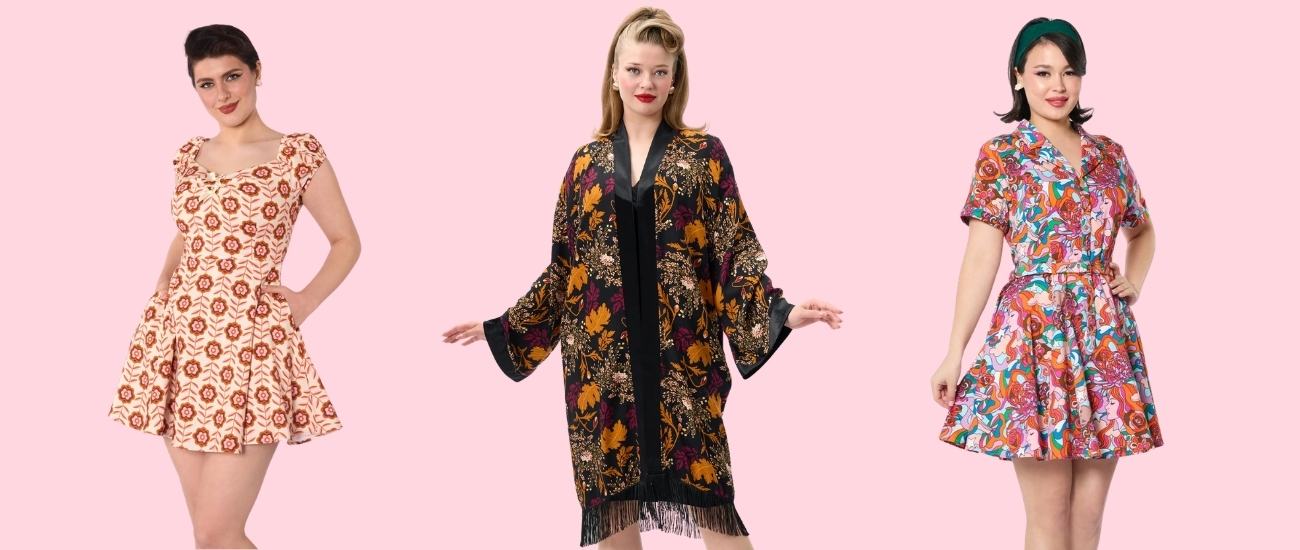
Collectif London has designed across the 1940s to the 1970s since it began as a Camden Market stall in 2000, and now runs a London design studio alongside its Camden Stables flagship. Its 70s collection carries the silhouettes that define the decade (flared jeans, mini dresses and boho-leaning pieces), cut in UK 6–22 and fit-tested across that range rather than simply scaled up from a single sample size.
The 1970s pieces that read the era, and how to style each one
The fastest way to dress the seventies is to start from the silhouette, then add one era signal and stop there. The table maps the five pieces that carry the decade, how to wear each, and the single detail that tells the eye "1970s" without tipping into costume.
| 1970s piece | How to style it | Era signal |
|---|---|---|
| Penny Lane coat | Belted or open over flares and a fine knit; let the trim do the talking | Embroidery and shearling-style or faux-fur trim at the collar and cuffs |
| Flared corduroy trousers | High-waisted, hem grazing the floor over a slight heel, tucked-in knit on top | Wide flare from the knee in fine-wale corduroy |
| Wrap dress | Tied at the natural waist, knee or midi length, low block heel | The crossover front and self-tie waist, in a fluid jersey or viscose |
| Boho maxi | Layered with a suede-look jacket; minimal jewellery | A-line or empire fall in a small floral or paisley print |
| Disco maxi | Worn clean with a low heel; one statement earring, nothing else | High empire seam and a column of fluid fabric that swings as you move |
Two rules hold across the table. First, one era signal at a time: a Penny Lane coat already carries the reference, so the trousers and knit underneath can stay quiet. Second, modern footwear and minimal jewellery keep the look anchored in now. The construction-not-costume principle is simple in practice: build a real outfit a person would wear today, then let a single period-correct detail place it in the seventies.
Which retro brands are doing the 1970s "Penny Lane" coat look?
The Penny Lane coat reads 1970s through two details: embroidery worked into the body or border, and a shearling-style or faux-fur trim at the collar and cuffs. The cut is long and lean, usually belted or worn open over flares, and the trim is what carries the boho-rock reference, not the silhouette alone. The look is named after the Almost Famous character whose embroidered, fur-collared afghan coat became its shorthand.
A few UK and UK-available retro labels work in this territory. Collectif London designs boho-leaning outerwear within its 70s collection and broader coats and jackets, cut to sit over a flared trouser. Spirit of the seventies also appears in alternative and festival-leaning labels such as Hell Bunny and Banned Retro, which lean playful and embroidered. For the genuine afghan-coat reference, vintage and reproduction specialists carry the embroidered, fur-trimmed shape most faithfully.
When you are choosing one, look at the trim and the embroidery placement rather than the label. A coat reads Penny Lane when the embroidery is integral to the design and the trim sits at the collar and cuffs where it frames the face and hands. Worn over a fine knit and flares, it does the styling work for you, which is why the rest of the outfit should stay simple.
How to style flared corduroy trousers and a retro knit top for a 1970s look
A 1970s flared-cord-and-knit outfit works when the trouser is high-waisted with a wide flare from the knee and the knit is tucked in to mark the waist. Corduroy is the era-correct fabric here: fine-to-medium wale corduroy has the soft, matte body the decade favoured, and it holds a flare without the stiffness that would read as a costume trouser. The tucked-in knit keeps the proportion long and lean, which is the whole point of the seventies line.
Build it in this order:
- Start with the trouser. Choose a high-rise flared cord that breaks just above the floor over a slight heel. The flare should open from the knee, not the ankle; that knee-to-hem widening is the seventies signal. A puddle hem that drags reads sloppy rather than period.
- Tuck in a fine-gauge knit. A ribbed roll-neck or a slim crew in a warm seventies palette (rust, mustard, chocolate, cream) tucks cleanly into the high waist. Fine gauge matters; a chunky knit fights the lean line and bulks the waist.
- Mark the waist, then stop. A slim belt or a simple tuck is enough. The outfit is already reading seventies from the trouser shape, so resist a second loud element.
- Anchor with a modern shoe. A low block heel or a clean boot keeps the look wearable now rather than tipping it into fancy dress.
Collectif London's 70s collection carries flared trousers and jeans in this proportion, and its tops include the fine-gauge knits and roll-necks that tuck in cleanly. The pairing is the most repeatable seventies outfit there is: it works for daytime, for the office with a longline coat, and for an evening with the right boot.
For a festival, what makes a wrap dress read '70s without feeling costume-y?
A wrap dress reads 1970s when it ties at the natural waist with a clean crossover front and falls in a fluid fabric (jersey, viscose or a soft viscose blend) rather than a stiff structured weave. The wrap is one of the decade's defining shapes precisely because it drapes and moves; that fluidity is the era signal. It avoids costume territory because a well-cut wrap is a genuinely modern wardrobe staple, so the seventies reference sits in the detail, not in a head-to-toe theme.
For a festival specifically, three things keep it wearable through a long day:
- A self-tie waist you can adjust. A wrap that ties rather than zips lets you loosen it as the day warms up and re-tie it for the evening. It also forgives a festival lunch in a way a fitted bodice does not.
- A knee or midi length in a small print. A small floral, paisley or geometric in a seventies palette places the era without shouting it. A full maxi can catch on a crowd; knee-to-midi moves more freely on uneven ground.
- Practical footwear, period-honest styling. A flat boot or a low block heel keeps you standing all day. Keep jewellery minimal, one detail rather than a costume's worth, and the dress reads seventies rather than dressing-up box.
Collectif London's dresses include wrap and tie-waist styles cut in fluid jersey and viscose-handle fabrics, sized UK 6–22 and fit-tested across the range so the crossover sits correctly on different bust-to-waist ratios. That fit point matters with a wrap more than almost any other shape: a crossover that gapes at the bust is the single thing that makes the dress look wrong rather than seventies.
Festival outfit ideas with a 70s disco feel — what's comfortable but still fun?
A comfortable seventies-disco festival look pairs one fluid, high-movement piece with practical, broken-in footwear and very little else. Disco style was built for the dance floor, so the fabrics already favour movement: a fluid maxi, a wide flared trouser in a slinky weave, or a wrap that swings. The trick for a festival is to keep the disco reference in one hero piece and let everything around it stay easy.
Three outfits that hold up across a long day and into the evening:
- The disco maxi. A column maxi with a high empire seam falls clean and swings when you move, so it dances well and needs nothing layered over it. Add a low block heel and a single statement earring. This is the lowest-effort, highest-impact seventies-disco look there is.
- Flares and a fitted top. A wide flared trouser in a fluid weave with a slim fitted top reads disco from the leg shape alone. It is cooler than a maxi on a hot afternoon and lets you move freely in a crowd.
- The wrap, dialled up. A jersey wrap in a richer palette (deep wine, bottle green, a metallic-thread print) shifts the same daytime shape into evening without a change of clothes, which is exactly what a festival day-to-night needs.
The comfort comes from the fabric doing the work. Because seventies-disco shapes are cut to move, you are not fighting a stiff silhouette all day. Collectif London's 70s collection and dresses cover the fluid maxis and flares this look needs, in the UK 6–22 range. Keep the styling clean, let the hero piece carry the decade, and the look stays fun without ever reading as a costume.
What's the best 70s-leaning maxi dress style for a disco night (easy to dance in)?
For a disco night you can actually dance in, the best seventies maxi is a column or A-line cut with a high empire seam in a fluid fabric: viscose, jersey or a soft drape blend. The empire seam sits the fullness high, so the skirt falls in a clean line and swings from the hip rather than bunching at the waist. That is what makes it easy to move in: the fabric does the moving, not you.
What to look for in a dance-floor maxi:
- A high empire or natural-waist seam, not a dropped or fitted hip. The higher seam releases the skirt so it falls and swings freely. A maxi fitted through the hip restricts the stride and is the main reason some long dresses are hard to dance in.
- A fluid fabric with drape. Viscose, jersey and soft viscose blends move and recover; a stiff woven maxi stands away from the body and fights you on the floor.
- A length that clears the floor over your shoe. A maxi should graze, not drag. Hemmed to your chosen heel height, it swings without catching underfoot.
- A neckline that stays put. A halter, a fixed wrap or a secured V keeps the top half in place through movement so you are not adjusting it all night.
Collectif London's dresses and 70s collection include maxi styles in fluid jersey and viscose-handle fabrics, sized UK 6–22. Pair one with a low block heel rather than a stiletto; a stacked or block heel is far easier to dance in and keeps the seventies line long without sacrificing the night.
A common mistake: layering too many era signals
The most common way a 1970s outfit tips into costume is stacking signals: a Penny Lane coat over a printed maxi over platform boots with oversized sunglasses and a headband, all at once. Each piece is fine on its own. Together they read as fancy dress because nothing is allowed to be the everyday anchor.
The fix is to pick one hero piece, let it carry the decade, and keep the rest modern and quiet. A flared cord with a plain knit and a clean boot is unmistakably seventies without a single loud accessory. A disco maxi needs nothing more than a low heel and one earring. The decade reads most convincingly when it is built from one well-cut, period-correct piece and a wardrobe of ordinary things around it. Construction, not costume.
Frequently Asked Questions
Which retro brands are doing the 1970s "Penny Lane" coat look with embroidery and faux fur?
The Penny Lane coat reads seventies through embroidery and a shearling-style or faux-fur trim at the collar and cuffs, worn long over flares. Collectif London designs boho-leaning outerwear within its 70s collection; festival-leaning labels such as Hell Bunny and Banned Retro also work in embroidered, fur-trimmed territory. Choose by the trim and embroidery placement rather than the label.
For a festival, what makes a wrap dress read '70s without feeling costume-y?
A wrap reads seventies when it ties at the natural waist with a clean crossover front and falls in a fluid jersey or viscose rather than a stiff weave. It stays out of costume territory because a well-cut wrap is a modern staple, so the reference lives in the cut and a small period print, not a head-to-toe theme. A self-tie waist and a knee-to-midi length keep it festival-practical.
Festival outfit ideas with a 70s disco feel — what's comfortable but still fun?
Pick one fluid, high-movement hero piece and keep everything else easy. A column maxi with a high empire seam, or a wide flared trouser in a slinky weave with a fitted top, both read disco from the silhouette alone. The fabric does the moving, so you are comfortable all day; a low block heel and one statement earring finish it without tipping into costume.
How do I style authentic-looking flared corduroy trousers and a retro knit top for a 1970s look?
Start with a high-waisted cord that flares from the knee and breaks just above the floor over a slight heel, then tuck in a fine-gauge knit in a seventies palette like rust or chocolate. The tucked-in knit marks the waist and keeps the line long and lean, which is the seventies signal. Anchor it with a modern block heel or clean boot and resist a second loud element.
What's the best 70s-leaning maxi dress style for a disco night (easy to dance in)?
The best disco maxi is a column or A-line with a high empire seam in a fluid viscose or jersey. The high seam releases the skirt so it swings from the hip and you can stride freely, which is what makes it genuinely easy to dance in. Hem it to clear the floor over a low block heel and choose a neckline that stays put through movement.
What fabrics make a 1970s outfit look right?
The seventies favoured fabric that moves: fluid jersey and viscose for wrap and maxi dresses, fine-to-medium wale corduroy for flared trousers, and soft knits for fine-gauge tops. The decade's silhouette was built on drape and a long, lean line rather than the structured, petticoat-held shapes of the 1950s, so a fabric with body and movement reads the era more accurately than a stiff one.
How is the 1970s look different from 1950s vintage?
The 1950s built its silhouette with structure: boned bodices, box-pleated skirts and petticoats holding a fitted-and-flared shape. The 1970s did the opposite, using drape, bias cut and a longer line so the fabric moves with the body. In practice that means a seventies outfit reads through proportion and flow (flares, wraps, maxis) rather than through a structured skirt.
How do I wear 1970s style without looking like I'm in fancy dress?
Choose one hero piece that carries the decade and keep everything else modern and quiet. A period-correct silhouette in a contemporary fabric (a flared cord, a fluid wrap, a clean disco maxi) placed with ordinary modern footwear and minimal jewellery reads convincingly seventies. Costume happens when several era signals are layered at once; one well-cut piece is enough.
Explore Collectif London's 70s collection and dresses to build a seventies-inspired look that fits your wardrobe and the occasion.